Tuesday, December 12, 2017

Feng Shui For Growth In Business

Entrepreneurs only want the best for their businesses. With everything aligned, it would be impossible not to succeed. Feng Shui, the ancient Chinese art of locating buildings and placing objects, helps to maximize the harmony with surroundings. As business owners adopt the principles of Feng Shui, they are inviting positivity and success into their businesses.

Let the light come in. Have the main doors open to an open space to allow the light to enter. Places that are well-lit attract positive energy. Feng Shui focuses on the five elements which are earth, wood, metal, fire, and water; make sure to balance these elements in ways such as having a window to let the light (fire) shine through, placing plants (earth) around the office, and if metal, wood, and water are hard to incorporate in an office, the next best thing to having those physically present in the workplace is by having a screensaver where the three are properly represented.


Image source: pixabay.com

Be clear of clutter. Tidy up the workplace to encourage a sense of breath and a flow of energy. Avoid piling thing and stacking them on top of each other; to prevent this from happening, invest in a filing cabinet or designate boxes where these items can be stored without having to disrupt the flow of good energy and creativity. Add visual elements to serve as an inspiration; these can range from expensive art pieces to drawings made by loved ones. The art should be vibrant and bright.

Keep stress at bay by placing stress relievers around the business area. If business partners feel stressed, it’s a good idea to give out stress balls to help them cope well with stress.

Pallavi Chhelavda has authored many books, conducted several seminars, and broadcasts her own TV show offering insightful advice on Vastu Shastra for home and business. She has been in the Vastu Shastra and Feng Shui area for over 26 years. Follow her blog for more Feng Shui tips.


Thursday, November 30, 2017

Common myths about Vastu Shastra

Vastu Shastra relates to both architecture and interior design, seeking to create balance and positive energy flow from one’s surroundings. It is based on the five natural elements: water, wood, fire, earth, and metal. But there are plenty of myths about vastu that need to be dispelled, according to Vastu Shastra and Feng Shui expert Pallavi Chhelavda, who has 27 years of experience and has written several widely translated books on the subject.

Image source: Pixabay.com

Myth: Mirrors cause bad luck for love life.
It’s the placement that could bring bad luck, not the mirror itself. Negate the negative energy by positioning the item against the north or east wall.

Myth: Doors shouldn’t align opposite each other in a line.
Did you know that even ancient temples can have doors aligned in a straight line? It’s best, however, to have this detail designed with the help of a professional vastu consultant.

Myth: Empty basements bring bad luck.
Empty spaces cannot be altogether avoided, but any bad vastu can be counteracted by keeping the basement clean, painted in light colors, and washed in bright lights to avoid any form of darkness.

Myth: Face east when conducting business.
This has no basis in vastu. Instead, choose the right direction in line with one’s business in order to reap the most success and profit.

Myth: Vastu is one and the same with Feng Shui.
While both are designed to guide humans in placement and direction, they have differences. Vastu is focused on the architecture of Hindu temples in relation to cosmic energy, while feng shui has its roots in grave placement in graveyards. In the modern world, they have different rules and elements.

 Image source: Pixabay.com 

Pallavi Chhelavda is a best-selling author, television personality, consultant, and founder. Her life is dedicated to helping people learn more about Vastu Shastra and Feng Shui to create peace and balance in their lives. Learn more about it on this page.

Monday, October 30, 2017

Feng Shui in the office: Bringing the desired energy 

People spend most of their time in the office, and often they come home having no good energy left in them. Taking into account the draining features of office work, it’s good to incorporate Feng Shui to promote health and productivity both at one’s corporate office and home office. Feng Shui can bring the desired and needed energy for success when one knows how to apply it. 

Image source: homedit.com

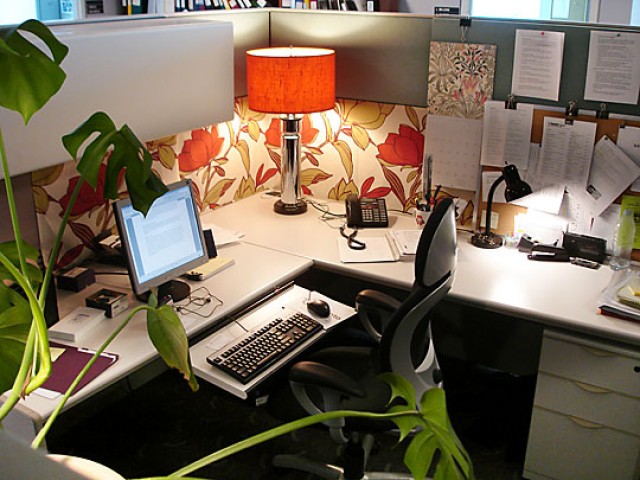
When not facing the office traffic, its door or its windows, one’s energy becomes weak and insecure. Orienting the office desk directly opposite the door helps one see opportunities as they come in. If this is impossible, have a mirror the reflects the office’s entrance as this offers protection and symbolizes quick perception of opportunities as they come in. 

Clearing the desk of clutter will encourage order and creativity. Doing so results in boosted productivity, and keeps the workspace organized. This can be achieved while fulfilling one’s style preferences. Bring in alive energy such as plants that are nice to look and also purify the air. 

Having high energy images in the workspace that remind one of happy and uplifting moments is helpful for encouragement and confidence to take on any task, as this keeps one’s energy up. Unlike the mundane scenes of the office, having something good and joyful to look at can bring success as this would drive an employee to be better at the job. 

Image source: homedit.com

Pallavi Chhelavda is a Vastu Shastra and Feng Shui expert. She is also a best-selling author of books that have been translated to different languages. As a TV personality, she has helped viewers learn to create peace and balance in their lives by utilizing the positive energy from the five elements. For more about Pallavi Chhelavda, visit this page.

Wednesday, September 20, 2017

A Brief History of Feng Shui Philosophy

The age-old principle of Feng Shui had been in use since ancient times. For millennia, ancient peoples have understood that both the physical environment around a building and other, subtler element have a profound effect on the quality of life of the building’s occupants. Early farmers found that certain places worked better for homes, businesses, and tombs than others.

Image source: wikimedia.org
What now known as Feng Shui came from a codified discipline that emerged in Asia more than 5,500 years ago. In India, the system was known as Vastu Shastra—the science of buildings—a foreshadowing of its principles that would later be corroborated by more modern sciences like geology and psychology. In China, it was first attested in the Zhou Dynasty and subsequently evolved into the different schools of Feng Shui. Some archeologists even speculate that a similar discipline had formed in prehistoric Europe.

As the disciplines developed, the practice was extended beyond domestic architecture. Geomancers and engineers worked closely with one another. In China alone, major cities were planned according to the tenets of Feng Shui.

The geomancers of ancient China and India understood what many modern engineers and architects would later learn. Certain locations and design choices often had a profound influence on people’s well-being and, at times, the structural integrity of the building. One location may cause a building to be susceptible to decay. Some design choices have time and again proven to be more pleasant or less stressful to the inhabitants.

Cultural fascination brought the art of Feng Shui away from its Asian roots to the world at large in the 1980s. Feng Shui principles were adopted in many places, the first being hospitals, that found that hallways redesigned to follow Feng Shui principles reduced stress.

Image source: wikimedia.org
Pallavi Chhelavda and her company, International Vastu Feng Shui Research Institute, work to help clients plan locations and design their properties according to the tenets of Feng Shui. Learn about her background and work in the field of Vastu Shastra and Feng Shui here.